Wednesday, September 14, 2016

Zero chance EU citizens in UK will keep same rights post-Brexit

Leading barrister tells Lords panel that UK may have to consider compensation for Britons abroad if they lose some rights
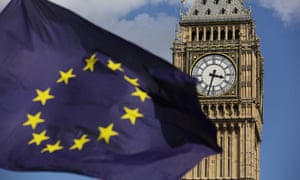
 
An EU flag in Westminster
An EU flag in Westminster. Photograph: Daniel Leal-Olivas/PA
The chances of EU citizens settled in Britain retaining all their rights to live, work and retire in the UK after Brexit have been rated as zero by legal experts.
A leading barrister who specialises in international public law told a House of Lords panel on Tuesday it was “inconceivable” that the laws would survive entirely intact.
Prof Alan Vaughan Lowe QC said this was the price millions of people – including 1.3 million Britons abroad and 3 million non-Britons living in the UK – were likely to pay for Brexit.
Such was the uncertainty surrounding negotiations and the demands of other EU states, he said, that the British government might have to consider compensation for British citizens abroad if some rights, such as access to Spanish or French healthcare, were lost.
But Lowe told the Lords justice subcommittee that what worried him most was the lack of knowledge about the issue at government level. “There is very little evidence of people knowing what they are trying to do,” he said.
Legal entitlements such as the right to work, reside, retire, vote in local elections and have access to welfare and health systems come automatically from Britain’s membership of the EU.
Only a limited number of rights, namely the right to own property and contractual rights, would be protected by international law, the peers were told.
Lowe said not only was there no clear objective on an individual’s legal rights post-Brexit in Britain or in Spain, France or any other EU state, it was not clear whom the government wanted to protect.
“If it’s been drafted with future citizens in mind, you would take a different view of rights that would naturally fade out with mortality,” he said.
The chair of the committee, Helena Kennedy, said the complexity of the so-called acquired rights was a concern to millions who wanted to plan their futures. Could any reassurances be given?
“Absolutely no,” Lowe replied. “I think there is zero chance [that the] … existing legal system affecting European nationals in this country will not change.”
Lady Kennedy said she was mindful of the number of lobbyists now attaching themselves to governments who would end up as negotiators.
Lowe suggested that in the absence of any evident expertise on the topic, the government could look at “decolonisation provisions” used in the 1950s and 1960s to protect the rights of British nationals in Rhodesia and Burma.
Sionaidh Douglas-Scott, a professor of law at Queen Mary University of London, pointed out there was no transparency in the Brexit negotiations, so it was difficult to assess what interests the government would seek to protect.
She said the Greenland treaty, which governed that country’s exit from the EU following a referendum in 1982, could be a starting point.
On the plus side, the Lords were told, the Greenland model was vague enough to allow Britain to attend to the legal detail over a period of 10 years after Brexit. On the minus side, it was mainly concerned with the protection of fisheries.
Kennedy said it was not clear with what “vehemence” the government would seek to safeguard some rights, and which ones would be “negotiated away”. She also questioned the seriousness with which the issue was being taken. “So it is worrying,” she said.
Safeguarding all EU rights might not be the best strategy, said Lowe. It might be that the government would have to step in to offer protection for Britons abroad.
“If [they] lose rights to access to a free health system, then maybe that is something the British government should pick up,” he said. “I can’t see any practical possibility whatsoever of getting a withdrawal agreement that ties up all the legal issues.”
Douglas-Scott said it was not clear who would be leading the negotiations on acquired EU rights – whether it was a government minister or a collective body that would include experts and opposition politicians.
Both Douglas-Scott and Lowe stressed that EU rights would fall away unless specifically protected under new British law.

Young boy stands up to anti-gay marriage protesters

Young boy stands up to anti-gay marriage protesters

A twelve-year-old stands before an oncoming anti-gay marriage protest. (Manuel Rodríguez/Regeneracion)
A twelve-year-old boy’s attempt to block an 11,000-strong anti-gay marriage protest in Mexico over the weekend has been lauded around the world.
A powerful photograph of the unidentified child has been featured by international media, after it was snapped by journalist Manuel Rodriguez at the protest in Celaya on Saturday and published online by Regeneracion.
It shows the boy standing in front of the approaching protesters, with his arms outstretched in an attempt to block them.
"I have an uncle who is gay and I don’t like people hating him,” the boy reportedly told Rodriguez later.
The protest was organised by the National Front for the Family coalition in response to Mexican President Enrique Peña Nieto’s proposed same-sex marriage reforms, which would see bans in 22 states overturned.
Last year, the Mexican Supreme Court ruled the state bans were unconstitutional, enabling same-sex couples to marry by filing individual legal challenges with a federal judge, the LA Times reports.
Same-sex marriage is legal in Mexico City and in nine out of 31 states.
The image has been compared to the famous 1989 “Tank Man” photograph, which depicts a protester standing before a column of tanks in Tiananmen Square, China.
Have a good news story you’d like to share? We’d like to hear from you. You can reach us at contact@9news.com.au.
© Nine Digital Pty Ltd 2016

Read more at http://www.9news.com.au/good-news/young-boy-stands-up-to-anti-gay-marriage-protesters#0ag5LIuSxSwaK9Kl.99

South Africa bars anti-gay US pastor Steven Anderson

South Africa bars anti-gay US pastor Steven Anderson - BBC News

Shared by
Belinda
bbc.co.uk - South Africa has barred controversial US pastor Steven Anderson from visiting the county because of his critical remarks about homosexuality. The home affairs minister said he was refused a visa as...

Two openly gay men are running for seats in Russian parliament

Two openly gay men are running for seats in Russian parliament - Gay Times

gaytimes.co.uk - The two men, 29-year-old Aleksei Korolyov and 33-year-old Bulat Barantayev, are thought to be the only openly gay men ever to run for seats in the State Duma, the lower house of the nation’s Federa...

Breakthrough technique could let men have babies with themselves

Breakthrough technique could let men have babies with themselves

independent.co.uk - A new experiment defies nature and might one day let two men have babies with each other. The shock new study overthrows the idea that it is only possible to produce children using an egg, and fert...

Boat tours highlight Amsterdam’s refugee past

Boat tours highlight Amsterdam’s refugee past

Tours on vessels once used to smuggle people across the Mediterranean spotlight city’s long history of welcoming refugees and migrants.
People board a boat for a tour of the canal network in Amsterdam through the eyes of refugees and migrants.
© UNHCR/Chris de Bode

Two years ago, a small, mastless Egyptian fishing boat with peeling blue paint pushed off from the Tunisian coast with 76 people on board. Eighteen miles southwest of Sicily, on August 29 2014, it was found by the Italian coastguard and towed to land.


Today the Hadir and another vessel ply the more tranquil waters of Amsterdam’s canals, taking residents and tourists on tours of the city’s history as seen through the eyes of the refugees and migrants – famous, infamous and unknown – that helped shape the Netherlands’ largest city.
At its helm on the weekly tours – for which Amsterdam city authorities have limited numbers to 12 – are a varied group of skippers with one thing in common: they are all refugees who have reached Amsterdam in similar circumstances to the boats they sail.
“It took some convincing to get me back on a boat,” said one, Mohammed al-Masri, a 24-year-old Syrian refugee who reached Amsterdam in 2015.
  • Mohammed Al Masri, 24, gives a guided tour of Amsterdam's canal network. A refugee from Syria, he crossed to Greece from Turkey in a small boat.
    Mohammed Al Masri, 24, gives a guided tour of Amsterdam’s canal network. A refugee from Syria, he crossed to Greece from Turkey in a small boat. © UNHCR/Chris de Bode
He left Syria in 2012 with his parents, two sisters and a younger brother. They went first to Lebanon and then Jordan. There he found himself unable to care for his family.
Being asked to skipper Hadir, however, brought back memories of a journey on which he was smuggled across Turkey before being bundled on to a dinghy with dozens of others, including 11 children and one blind man, that took them to Greece. It was a frightening experience.
The opportunity to tell his story on the Hadir tours proved too tempting.
The Hadir and its sister vessel, both previously used to smuggle people across the Mediterranean. As well as the tours, they offer on-board dinners at which passengers are invited to meet and talk to refugees and immigrants, and shuttle transport to some of the city’s many festivals.
“I hope travelling with our crew will challenge these preconceptions.”
The project, which is partly funded by the Dutch government, is the brainchild of Teun Castelein, a Dutch artist who in 2012 was disturbed by the way the media covered the plight of refugees and migrants who drowned making the hazardous crossing to Europe from North Africa.
He continues to be driven by a sense that public misconceptions about refugees and migrants need to be challenged, particularly the mischaracterization of refugees as either a potential threat or victims. “I think they are both misconceptions and I hope travelling with our crew will challenge these preconceptions.”
The project employs 10 people. All are refugees or migrants - some of them second generation – drawing on the city’s long history of welcoming immigrants and refugees through the ages.
Eritrean Sami Tsegaye, 22, is one of the tour boat skippers. He reached the Netherlands after crossing the Mediterranean Sea from Libya on vessel similar to the one he now operates. “The first time on this boat was a bit scary. After sailing so many times I’m much more relaxed now. I learned to swim. I love it.”  © UNHCR/Chris de Bode
Amsterdam became a Protestant city in 1578, but made a point of tolerating people of all faiths – an openness vital to its prosperity.
It subsequently became a magnet for persecuted minorities from throughout Europe over the next century: Protestant bankers from Belgium, wealthy Jews escaping the Inquisition in Spain and Portugal, poorer Jews from Eastern Europe, Huguenots from France. By the middle of the 17th century it was the continent’s most important commercial hub.
Today, the city is home to people of 180 different nationalities. About 45 per cent of the greater metropolitan population of 1.6 million are from an ethnic minority.
 “They are humans just like you, they have minds, they can think, they can fill some spaces and improve some things.”
The tour highlights the experience of refugees and migrants through history. There was the executed Danish girl, Elsje Christians, garrotted for murder and her body exhibited as a warning to others. Her remains were drawn by Rembrandt while they were on public display.
Rederij Lampedusa owns two boats. A small one named “Hedir” (Stormy Weather) and a bigger one named “Al Hadj Juma” (Mister Friday).  © UNHCR/Chris de Bode
There were the philosopher Baruch Spinoza, whose family fled the Inquisition, diarist Anne Frank, whose family fled Nazi Germany in the 1930s, outspoken Somali refugee Ayyan Hirsi Ali who sought asylum in 1992. There were Italian chimney sweeps and Chinese doctors.
Masri says his role on the tour complements that history.
“I am a real fact,” he said. “I am a fresh story. I hope it raises awareness that newcomers are not just here to steal your money or corrupt your country. They are humans just like you, they have minds, they can think, they can fill some spaces and improve some things.”
Passenger Piet van den Boog, sailing on the Hadir for the first time, said the opportunity to meet refugees was important because direct contact between people was always the most effective.
Besides, the 64-year-old painter added, “the boat tells its own story.”

Monday, September 12, 2016

Being LGBT in Arkansas Catholic Schools is Now Punishable by Expulsion - The New Civil Rights Movement

Being LGBT in Arkansas Catholic Schools is Now Punishable by Expulsion - The New Civil Rights Movement

Shared by
Many Voices
thenewcivilrightsmovement.com - Catholic schools in Arkansas are attempting to erase the identities of LGBT students by threatening them with expulsion should they dare to express their true selves.  The Catholic Dioceses of Litt...